
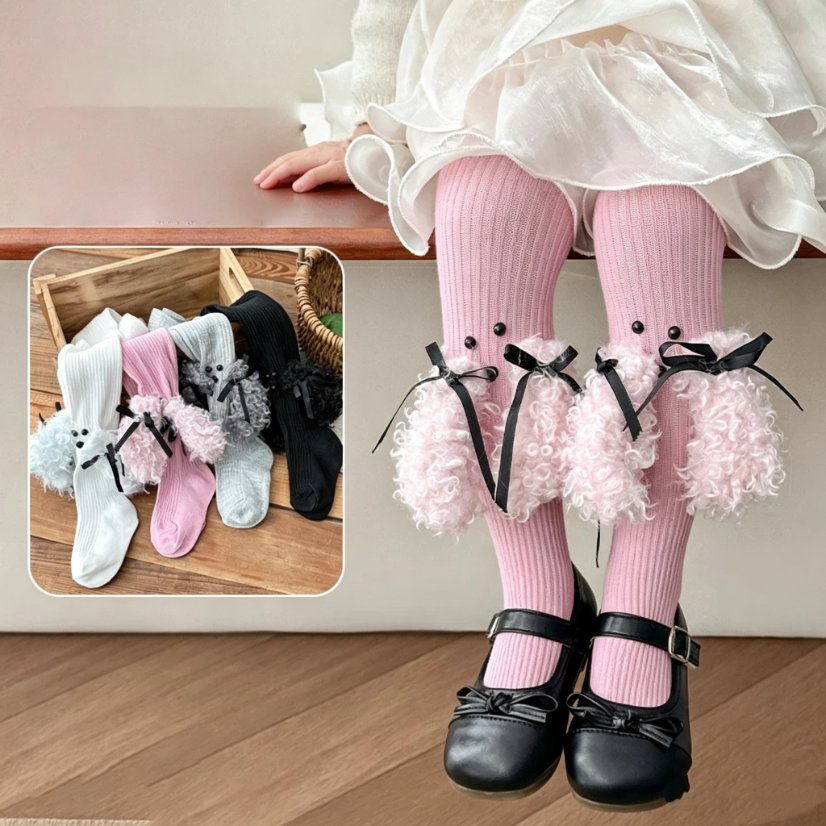
A decorative legwear appearance approval should identify the selected product, label each visible trim area and record what the buyer accepts or still queries. Jinyan’s Children’s Tights page shows ribbed legwear with curled trim, black bows and bead accents. Those features can support a useful visual review without treating a catalogue photograph as proof of materials, attachment strength or suitability. Build a small reference map, then use matching views of the actual offered sample to resolve appearance questions before a purchasing decision.
Identify the pictured style before approving its decoration
Save the Children’s Tights product reference and the selected image with a date. Keep the supplier’s page name in the enquiry while describing the visible item plainly as decorative ribbed legwear. The styled views show the legs and feet rather than the complete upper construction. Ask the supplier to confirm the exact garment form and offered style identifier instead of inferring an unseen waist or assuming that a page heading fully describes the construction.
Give the selected reference an internal buyer code and record the actual sample identifier when a sample is received. The pink composite includes an inset with several colour references. Treat that inset as catalogue presentation rather than a count of items in a selling pack. The immediate decision is which visible appearance is being requested; supply contents and orderable colours need their own confirmed answers.
• Save an untouched official image alongside any annotated working copy.
• Link each appearance comment to one labelled area and one view.
• Record sample identity separately from the catalogue reference and from the final order.
Divide the appearance map into useful observation zones
Use simple labels for the ribbed base, the curled decorative area, each visible bow area and the bead accents. A buyer does not need to name an unseen manufacturing process to describe an appearance concern. For example, a comment can identify the direction of a bow loop or a visible difference in the outline of the curled trim. It should point to the relevant view rather than rely on a general instruction to match the picture.
Leave room for supplier clarification where the catalogue view hides a detail. Do not duplicate the number of visible front accents onto the reverse or assume that both legs have identical unseen features. A map can distinguish a required feature, an accepted appearance and a detail not yet observed. That separation makes the approval record useful when sampling or production teams receive a later question.
Reference zone
Appearance information to record
Evidence to retain
Ribbed base
Visible rib direction and overall colour reference
Matched front or side view of the actual sample
Curled decoration
Outline, visible coverage and placement relative to the base
Labelled view with the relevant edge visible
Bow areas
Visible bow colour, orientation and shape comments
One clear view for each queried area
Bead accents
Visible positions and appearance comments
Detail view; hidden positions remain unresolved
Reverse or covered areas
What further view the buyer requests
Supplier response or an explicit not-observed entry
Compare views under a recorded presentation condition
The white seated reference and the pink composite use different arrangements. A supplier reply should identify which view answers each question. Ask for a sufficiently clear view of the actual offered sample, with its identifying label or reference recorded separately. Keep orientation and background consistent where practical, so a changed camera angle is not confused with a changed trim position.
A screen image provides an appearance reference rather than a controlled colour standard. If the buyer requires a physical colour comparison, identify the agreed physical reference and the decision record separately. Do not turn a difference between two photographs into a quantified colour tolerance. Likewise, folds and shadows may change the apparent rib or trim outline; resolve the specific area through another identified view instead of guessing hidden geometry.
Keep appearance acceptance separate from technical acceptance
For each zone, use a response such as accepted for appearance, supplier clarification requested, or not observed. Include the reviewer, reference version and date. A note accepting a bow’s visible orientation is narrower than an approval of how it is attached. Maintain that distinction when the record is copied into a purchasing file or forwarded to another department.
The product page contains descriptive material and performance wording, but this appearance map does not verify fibre composition, fastening security, durability or child-product compliance. If separate technical evidence is required, ask the supplier for the relevant product-specific information through the appropriate purchasing review. Do not describe a photograph, a visible bead or a completed appearance row as a passed safety test or a confirmed performance result.
Close the visual review with a controlled reference version
When the supplier changes a bow, trim shape or decorative position, save the revised reference with a new version label. Record which zones changed and which existing observations still apply. Preserve the earlier view rather than replacing it silently. This makes it possible to explain whether a later sample differs from the accepted appearance or merely uses a different photographic arrangement.
Send unresolved visual questions through Jinyan’s contact page with the labelled reference included. Keep any related procurement notes linked through the Jinyan blog, while retaining the actual appearance decision in the sample file. The finished output is a traceable visual record for a particular offered item, with open questions visible and separate material, dimensional and compliance decisions left to their own evidence.
Frequently asked questions
Can the photographs establish the full garment construction?
They show particular leg and foot views. Request the complete offered garment description and any missing views before assuming an unseen upper section or construction detail.
Does the colour inset show the contents of one pack?
No. It is a catalogue presentation. Ask which actual items and colours are included in the quoted selling unit instead of counting the displayed references as inventory.
Does accepting the bow appearance approve its attachment?
No. Record the appearance decision at its stated scope. Attachment construction, performance and applicable compliance evidence require separate supplier information and review.
How should an unclear reverse detail be handled?
Mark it not observed and request an identified view of that area. Do not copy front-view observations onto hidden surfaces or enter an assumed result.
Product and contact references
https://jinyansocks.com/product/children-s-tights/
https://jinyansocks.com/contact/
https://jinyansocks.com/blog/