
When a legwear product page gives conflicting age descriptions, preserve both statements and ask the supplier to identify the applicable style-specific size schedule. Jinyan’s Children’s Tights page describes an age span of three to eight years in its narrative, while its S–XL list contains different age brackets, including month-based entries. A buyer should not choose one version, fill gaps or make a fit recommendation from the photographs. Use a clarification log to obtain an explicit supplier response before using age wording in a quotation request or downstream product information.
Save the two source statements as separate observations
Identify the Children’s Tights page by its actual URL and the date it was read. Keep the narrative description separate from the size list, even when both appear on the same page. This preserves the difference that needs answering. Reformatting the page into one neat list too early can hide the inconsistency and make an internal assumption look like a supplier-confirmed specification.
Use neutral wording in the enquiry: the saved narrative and the saved list do not align, so confirmation is required. Their presence does not establish why they differ. The page may require a correction or a more precise applicability explanation, but the buyer should not invent that explanation. Retain the source text as evidence of the question rather than declaring one statement a proven typographical error.
• Record the product URL, saved reference date and visible style reference.
• Keep each conflicting statement intact in its own source field.
• Request the supplier’s applicable schedule and its product scope before using a revised version.
Make the actual discrepancy easy for the supplier to answer
A short table lets the supplier respond to the precise entries instead of sending a general assurance that the product suits children. Preserve the source’s month and year abbreviations until their meaning and application are confirmed. Do not interpolate a missing bracket, change an endpoint or convert an age description into a garment dimension. None of those operations resolves the source conflict.
Ask the supplier whether the listed labels belong to the exact offered reference shown in the selected gallery image. If different product versions use different schedules, each version needs a separate identifier and applicable list. If a corrected single schedule is provided, retain its revision and issuer. The response should explain which source entry it replaces or how each entry is intended to apply.
Source location
Observed wording or entry
Supplier clarification requested
Narrative description
Age span described as 3–8 years
Confirm the exact offered style and applicable schedule
Size list: S
0–6M
Confirm the label, abbreviation and applicability
Size list: M
6–12M
Confirm whether this belongs to the same style version
Size list: L
2–4Y
Identify the supplier-confirmed current entry
Size list: XL
5–7Y
Confirm applicable schedule and any corrected source version
Match the answer to a particular offered reference
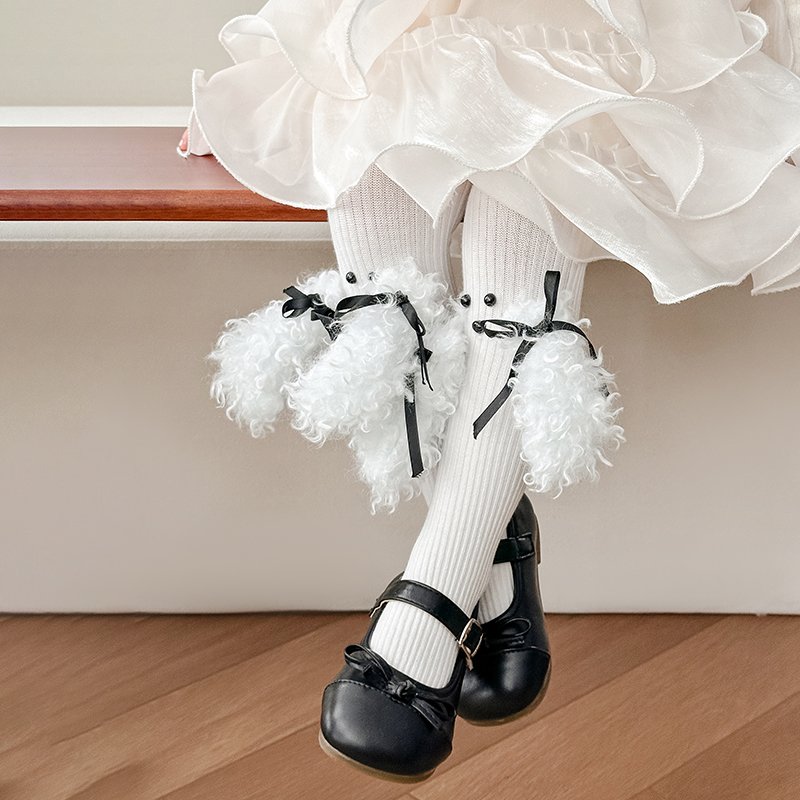
Attach a selected official reference image to the clarification request. Use it to identify the decorative ribbed item, not to infer the wearer’s age or the size being photographed. The visible legs, footwear and clothing do not supply reliable age or measurement evidence. Ask for the supplier’s actual product or version identifier when one is available.
Where a supplier offers multiple colours, ask which identified options the confirmed schedule covers. A gallery image in pink and a gallery image in white can both be helpful visual references, but they do not establish identical size availability. Keep the size-label schedule separate from any commercial colour-and-quantity request. This allows a supplier to clarify an unavailable option without changing the confirmed schedule for another item.
Use response states that preserve unresolved questions
Give the enquiry a clear response state: clarification requested, reply received but scope unclear, or schedule confirmed for the identified reference. Record the actual supplier wording with its date. If a response repeats only the page’s general description, leave the detailed conflict open. A completed communication does not necessarily mean the requested applicability question has been answered.
A physical sample can add its own identifier and attached size label to the record. That observation does not independently validate a catalogue age bracket or establish wearer suitability. Likewise, an age-labelled schedule is not a dimensional inspection method, material declaration or child-product compliance result. Keep those evidence types separate rather than treating one accepted document as approval of every aspect of the item.
Release only the confirmed version into purchasing documents
After receiving a clear answer, give the applicable schedule a controlled revision label and reference it in the buying file. Preserve the original conflicting page snapshot and the supplier’s response. If a quotation uses a different size-label list, ask which version it follows before transferring the information into an order request. This avoids carrying two incompatible schedules forward without explanation.
Send remaining questions through Jinyan’s contact page with the table and selected image attached. Related explanatory notes can link back through the Jinyan blog, while the purchasing record retains the actual supplier answer. The output is one traceable, style-specific schedule or an explicit unresolved enquiry. It is not an independently verified age guide, a promise of fit or permission to add unsupported suitability wording.
Frequently asked questions
Should the buyer simply choose the more detailed size list?
No. More detail does not establish applicability. Ask the supplier which schedule belongs to the exact offered reference and retain the response with the saved source.
Can missing ages between listed brackets be filled in?
Do not invent additional brackets or infer coverage. Preserve the listed entries and request a complete applicable schedule if the buyer needs one.
Does the catalogue model show which age or size is correct?
No. The styled photograph is an identification reference. It does not establish a reliable age, attached size label, body measurement or wearer-suitability conclusion.
What if the supplier has not resolved the discrepancy?
Keep the clarification open and identify the unresolved fields. Do not present either conflicting source statement as a confirmed buying specification or a verified age recommendation.
Product and contact references
https://jinyansocks.com/product/children-s-tights/
https://jinyansocks.com/contact/
https://jinyansocks.com/blog/